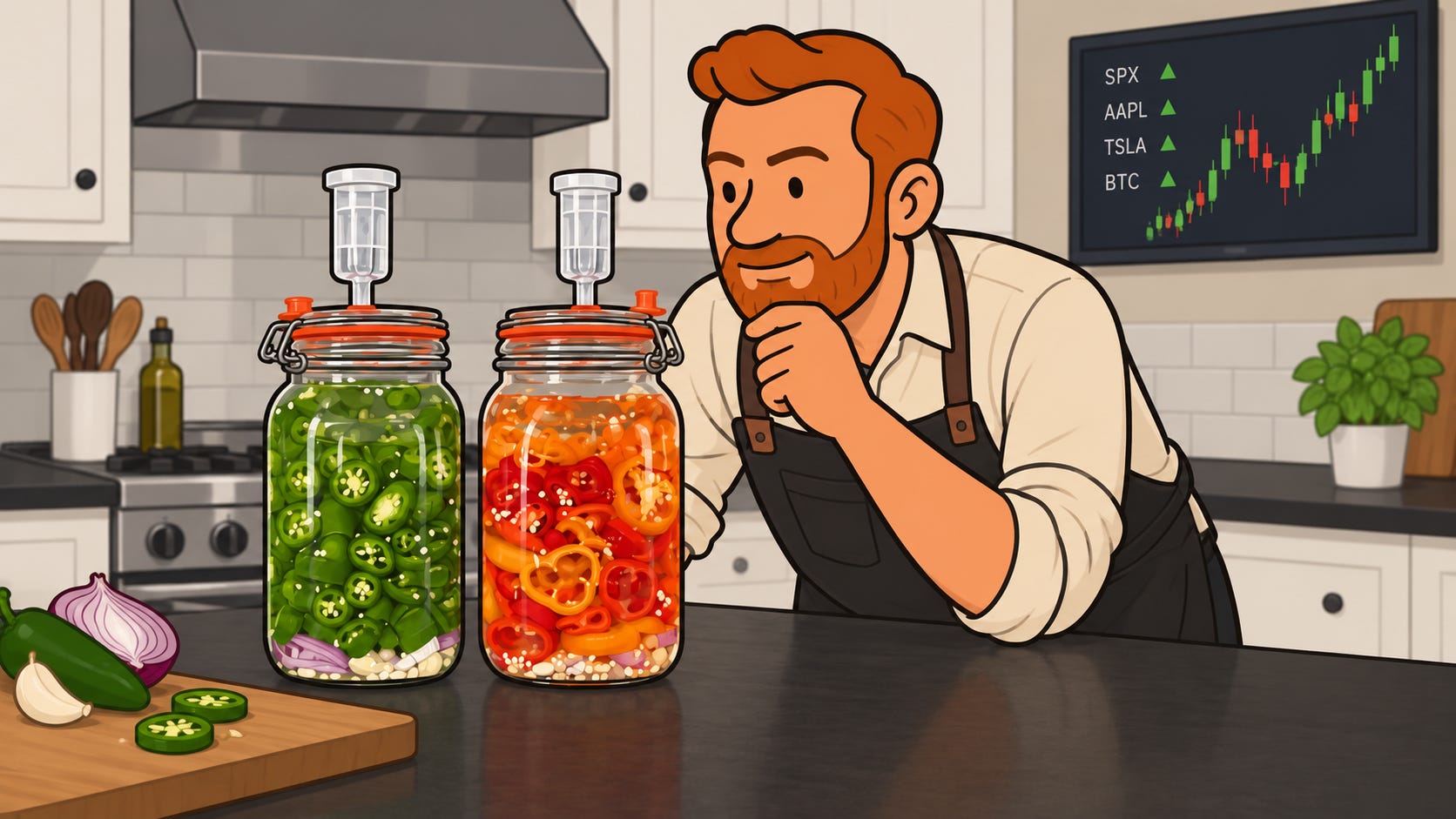
I’m making hot sauce.
The formula isn’t complicated, and there’s a wide margin for error. Rough chop a selection of peppers, mix a few spicy ones in with your sweeter varieties, throw in some garlic and shallot to round it out.
The brine is the most precise part of the recipe, where you’ll want a three percent saline solution. Pull out the trusty scale, dial in thirty grams of salt for every liter of water. Stir. Repeat again fifteen minutes later after you’ve misjudged how much pepper a liter covers.
A lactic acid fermentation triggered by salt and low oxygen is fertile ground for bacteria. All of this comes right off the skin of the peppers. Mostly these are good, but when you’re playing with petri dishes, a few techniques are critical to not spoil the party.
All the peppers need to sit below the water line or they’re inclined to pick up bad yeasts and molds. The trick to doing this is a fermentation weight, which mostly works, but in my case left a few floaters creeping up the side.
Not interested in poisoning my family or enduring the mockery of another failed experiment, I went out and picked up some thin food grade plastic. With a little MacGyver engineering, I cut it to the shape of the jar and hole punched a semblance of a screen. With the glass weight now pushing the entire surface area, the fruit and future sauce was well submerged.
Subscribe now
While unnecessary,…
Continue reading on Substack